Let Laid-Off Marylanders Build Businesses, Not Just Hunt for Jobs
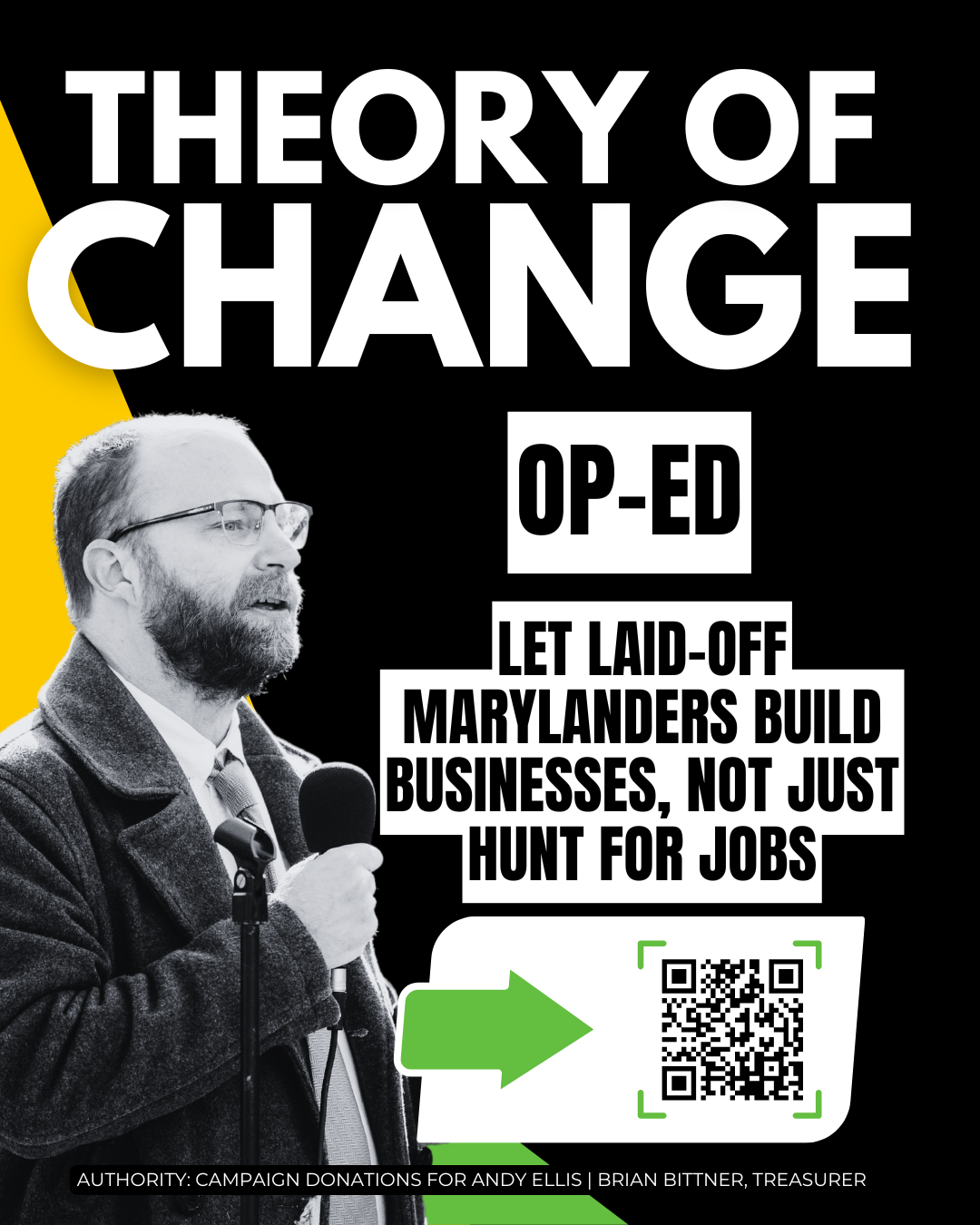
This Wednesday, legislation that could reshape how Maryland supports laid-off workers goes before the General Assembly. Delegate Charkoudian's Unemployment Insurance Modernization Act, HB 188, and its Senate cross-file SB 3 from Senator Kramer, would finally index unemployment benefits to actual wages, structural repairs decades overdue. But the bill should go further. Maryland needs to let displaced workers use their benefits to start businesses, not just hunt for jobs that may no longer exist.
I know because I'm one of them.
In June, after 15 years and surviving multiple rounds of job cuts, the layoff economy finally caught up to me. My employer outsourced my position overseas. I'd started on the call center floor and worked my way to Business Intelligence Lead, a good-paying tech job I earned through years of learning the business from the ground up.
Now I'm applying for dozens of positions I'm qualified for, many offered to me by the Maryland Workforce Exchange as part of my unemployment insurance claim. Each of these applications is good enough to keep my benefits coming, as are a host of other reemployment activities, like updating my resume, or saving a job search. But for me none of these things have had any meaningful contribution to my re-employment.
I'm not alone. Over one million white-collar jobs were cut nationally in 2025—a more than 50% increase from the year before. According to the American Staffing Association, forty percent of white-collar job seekers last year couldn't land a single interview. Here in Maryland, we've lost over 15,100 federal jobs since January of 2025, the most of any state in the nation.
Job losses when industries restructure are not new, they are part of the reason unemployment insurance exists. What is different this time is the companies still need the work done. They just don't want the workers. They don't want to pay American wages, and they really don't want to pay for healthcare, retirement, payroll taxes, or leave. Instead they want contractors, partial or fractional workers, or consultants.
The work continues. The full time jobs don't.
Maryland's unemployment insurance was designed for an economy where laid-off workers found similar jobs at similar companies. That world is gone. Industry leaders and economists warn that AI could eliminate half of all entry-level white-collar jobs within five years. DOGE has worked to shrink the federal workforce through automation, and Maryland, home to 269,000 federal workers, sits squarely in the crosshairs.
Some of us could create our own jobs—and jobs for others. But Maryland's unemployment system actively discourages it.
So I'm doing what displaced workers have always done: building something new. I'm pursuing classes in my field and rapidly adding technical certifications. With two former colleagues—both PhDs and high-level corporate experience, I'm launching a consulting business. We have the skills. We have the leads. We have paying work on the horizon.
I can pursue both. But under Maryland's rules, the system punishes success. Early business income reduces benefits. Land my first contract, even if it's not paid out yet? Benefits drop. Make my first sale? Benefits drop again. The early traction that proves a business is viable becomes the reason to cut support.
Since 1995, Oregon has run a Self-Employment Assistance program, under federal guidelines, that lets unemployed workers collect benefits while starting a business. The program doesn't extend benefits or increase the amount, it simply lifts the work search requirement and lets participants work with the Small Business Development Centers the state already funds. Participants keep every dollar they earn from their new business without any reduction in benefits. Oregon treats early revenue as a sign of success, not a reason to cut support.
The results are positive. According to program administrators: more than 1,500 businesses launched, 77 percent still operating years later, Nearly half hired employees—an average of 3.12 new jobs each. This isn't new spending, just smarter allocation of unemployment Insurance money already being spent.
Maryland enacted Self-Employment Assistance provisions in 1995, but the program never launched and the statute has since been removed. We need new legislation—comprehensive, mandatory, and funded—that lets dislocated workers receive benefits while building a business, waives job search requirements, and lets participants keep business income without penalty.
Oregon's model is proven. Maryland just needs the will.
I know I'm not alone. Thousands of Marylanders are trapped in the same bind—qualified, motivated, ready to build something, and told by their own safety net to keep pretending otherwise. We shouldn't have to choose.
Andy Ellis is a Green Party candidate for Maryland Governor.